Grass-Fed Beef Liver Benefits: Easy Ways, Amazing Results
Introduction: Nature’s Most Concentrated Source of Nutrition
The grass fed beef liver benefits are so extraordinary that this humble organ meat has earned the title of “nature’s multivitamin.” While liver has been a staple of traditional diets across cultures for millennia it fell out of favour in modern Western cuisine as processed foods and muscle meats took centre stage. Today a growing body of nutritional science has brought liver back into the spotlight. Interest in ancestral eating patterns has surged too. and for good reason. No other single food delivers the same concentration of essential vitamins, minerals . bioactive compounds as grass-fed beef liver, making it one of the most powerful additions you can make to your diet.
What sets grass-fed liver apart from its conventional counterpart is the quality and profile of the nutrients it contains. Cattle that graze on diverse chemical-free pastures produce liver that is richer in omega-3 fatty acids conjugated linoleic acid (CLA) . fat-soluble vitamins compared to liver from grain-fed, feedlot-raised animals. This is not a marginal difference . studies have shown that the nutrient composition of grass-fed liver can be significantly superior . This is particularly in terms of the ratio of anti-inflammatory omega-3s to pro-inflammatory omega-6s. When we talk about grass fed beef liver benefits, we are talking about a food that is not just nutritious but optimally nutritious.
What This Means for You
In this comprehensive article, we will explore the science behind the grass fed beef liver benefits, break down the specific nutrients that make liver so special . explain why choosing grass-fed over conventional matters for your health. Whether you are a health enthusiast looking to optimise your nutrition or someone dealing with specific deficiencies understanding the power of this superfood can transform your approach to eating. For guidance on where to find quality liver, see our article on where can I get beef liver.
Grass-Fed Beef Liver Benefits: The Nutritional Profile
To fully appreciate the grass fed beef liver benefits, it is helpful to look at the actual numbers. A 3.5-ounce (100-gram) serving of cooked beef liver provides approximately 135 calories, 20-25 grams of complete protein . 3-5 grams of fat. But the micronutrient content truly sets liver apart from every other food. According to Healthline’s comprehensive nutritional analysis, a single serving of beef liver delivers:
- Vitamin B12: Over 3,000% of the daily recommended intake — by far the richest food source of this critical nutrient
- Vitamin A (retinol): Over 600% of the daily value, in the form of preformed, immediately bioavailable retinol
- Riboflavin (Vitamin B2): Over 200% of the daily value, essential for energy metabolism
- Copper: Over 600% of the daily value, important for iron metabolism and neurological function
- Folate (Vitamin B9): Over 80% of the daily value, crucial for DNA synthesis and cell division
- Iron: Approximately 80% of the daily value, in the highly bioavailable heme form
- Choline: Significant amounts, supporting brain health and liver function
- CoQ10: Notable levels, supporting cellular energy production
These numbers are not just impressive on paper. They translate into real, measurable health benefits. The WebMD guide to eating liverhighlights that few foods can match this combination of nutrient density and bioavailability . This is why liver people have used therapeutically in traditional medicine systems for centuries.
Why Grass-Fed Matters: The Nutritional Difference
The distinction between grass-fed and conventional liver is not merely philosophical — it has measurable implications for the grass fed beef liver benefits you receive. Cattle evolved to eat grass, not grain, and their bodies . including their livers — function optimally when they consume their natural diet. Cattle raised on pasture with exclusively grass and forage produce superior liver tissue. It accumulates higher levels of certain beneficial compounds:
Higher Omega-3 Fatty Acids: Grass-fed liver contains significantly more omega-3 fatty acids than grain-fed liver. Omega-3s support brain health, cardiovascular function, and inflammation reduction throughout the body. The omega-3 to omega-6 ratio in grass-fed liver is closer to the ideal for human health. Grain-fed liver tends to be higher in pro-inflammatory omega-6s.
More Conjugated Linoleic Acid (CLA): CLA is a beneficial fatty acid found in ruminant animals that associates with reduced body fat improved insulin sensitivity and anti-inflammatory effects. Grass-fed animals produce substantially more CLA than their grain-fed counterparts, and this beneficial fat stores in the liver tissue.
Practical Takeaways
Higher Fat-Soluble Vitamins: Vitamins A, D, E, and K are fat-soluble, meaning they store in fat tissue. Grass-fed cattle that consume fresh forage accumulate more of these vitamins. The liver tissue benefits from this too. This means grass-fed liver is not only richer in vitamin A but also in vitamins D, E, and K2 . nutrients that are difficult to obtain from most modern diets.
Lower Toxin Exposure:Grass-fed, organically raised cattle are not exposed to the synthetic pesticides, herbicides . chemical residues that can accumulate in the tissues of conventionally raised animals. The liver does not “store” toxins as many believe. However, the animal’s overall chemical exposure does affect liver tissue quality and safety.
Top Grass-Fed Beef Liver Benefits You Need to Know
1. Unmatched Vitamin B12 Content for Energy and Brain Health
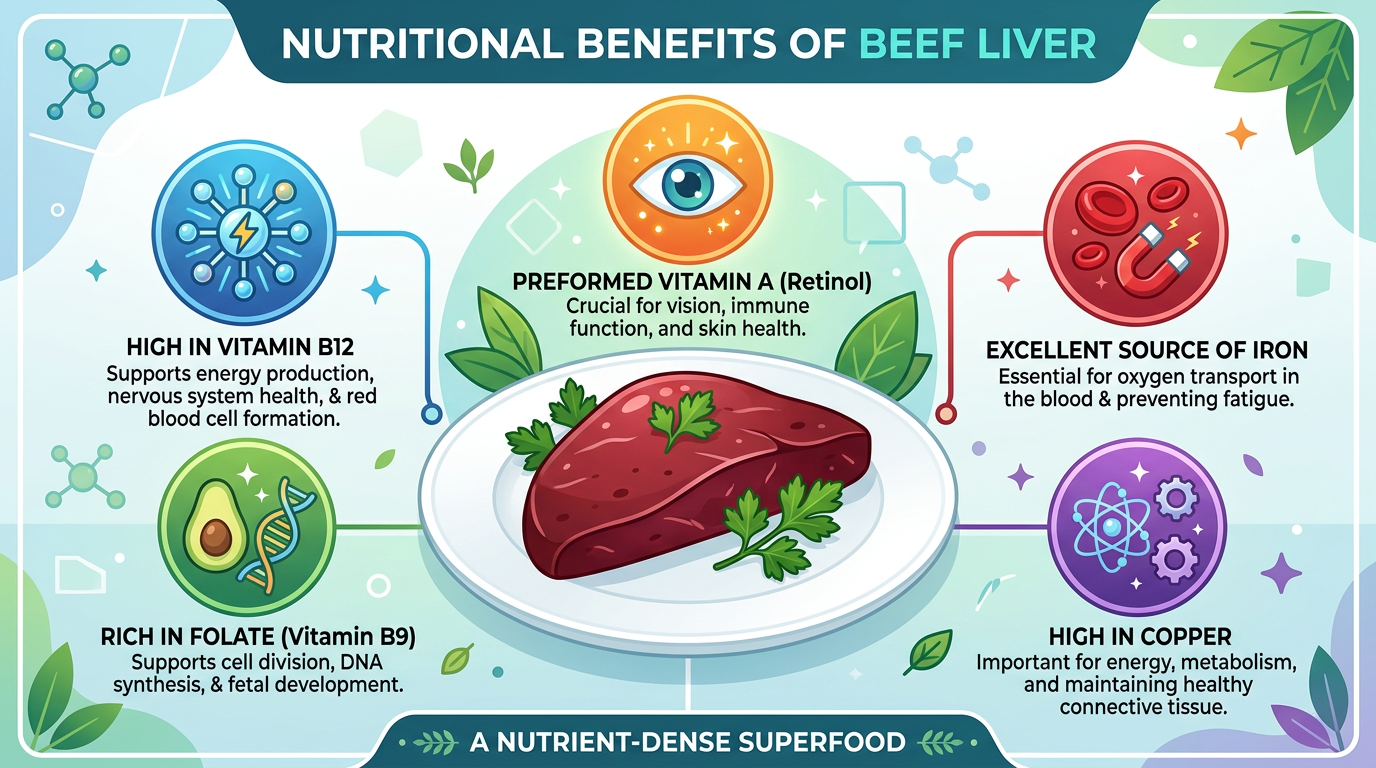
Perhaps the most well-known of the grass fed beef liver benefits is its extraordinary vitamin B12 content. A single serving provides over 30 times the daily recommended intake. Vitamin B12 is critical for the production of red blood cells the maintenance of the myelin sheath that protects nerve fibres . the synthesis of DNA. According to Dr. Axe’s guide to vitamin B12 foods, beef liver ranks as the number one dietary source of B12, far surpassing fish, eggs, and dairy.
B12 deficiency is surprisingly common, particularly among vegans, vegetarians, older adults, and individuals with digestive disorders that impair nutrient absorption. Deficiency symptoms include fatigue, weakness, neurological problems, cognitive decline, and mood disturbances. Regular consumption of grass-fed beef liver can prevent and even reverse B12 deficiency . This provides a natural highly bioavailable source of this crucial vitamin that no plant-based food or synthetic supplement can match in terms of absorption and effectiveness.
2. Bioavailable Heme Iron for Blood Health
Iron deficiency is the most common nutritional deficiency worldwide. It affects an estimated 2 billion people. The iron in beef liver is heme iron . This is the form found in animal tissues and is absorbed by the body at a rate of 15-35% . By comparison, non-heme iron from plant foods only absorbs at 2-20%. Grass-fed beef liver is exceptionally effective for preventing and treating iron-deficiency anaemia.
What makes the iron in liver even more valuable is that it comes packaged with copper vitamin B12 and folate . all of which work synergistically to support healthy red blood cell production. This combination is far more effective than taking isolated iron supplements . Supplements can cause digestive distress and often absorb poorly. The WebMD guide to organ meat health benefits notes that the nutrient synergy in organ meats is one of the reasons they are so effective at addressing nutritional deficiencies.
3. Preformed Vitamin A for Immune Function and Vision
Vitamin A supports immune function, vision, skin health, and cellular communication. However the form of vitamin A found in plant foods (beta-carotene) must be converted by the body into the active form (retinol) . this conversion is inefficient in many people . particularly those with certain genetic variations, digestive issues, or thyroid problems. Grass-fed beef liver provides vitamin A as preformed retinol. It is immediately bioavailable and requires no conversion.
A single serving of liver provides over 600% of the daily value for vitamin A . This makes it one of the most concentrated dietary sources available. People who struggle to convert plant-based vitamin A find this particularly beneficial. as well as for pregnant and breastfeeding women who have increased vitamin A needs. It is worth noting however that because liver is so rich in vitamin A it should be consumed in moderation . typically once or twice per week — to avoid excessive intake. The Healthline guide to organ meats provides additional guidance on safe consumption patterns.
4. Folate for DNA Synthesis and Fetal Development
Folate, also known as vitamin B9, is critical for DNA synthesis, cell division, and proper fetal development during pregnancy. Folic acid (the synthetic form in supplements and fortified foods) is widely available. However, many people have genetic variations like MTHFR mutations. These impair folate conversion. Grass-fed beef liver provides folate in its natural, bioavailable form . This makes it an excellent dietary source for everyone, including those with MTHFR variations.
Adequate folate intake is particularly important for women of childbearing age as deficiency during early pregnancy associates with neural tube defects. The combination of folate, B12 . iron in liver makes it one of the most nutrient-dense foods for supporting healthy pregnancy and fetal development . a fact that was well understood by traditional cultures, many of which prioritised organ meats for pregnant and nursing women.
5. Copper and Trace Minerals for Metabolic Health
Beef liver is one of the richest food sources of copper. It provides over 600% of the daily value per serving. Copper is essential for iron metabolism and energy production. It also supports neurotransmitter synthesis and connective tissue formation. Copper works in close partnership with iron . without adequate copper, the body cannot properly utilise iron, even when iron intake is sufficient. Liver is effective at addressing anaemia because it provides both iron and copper in the optimal ratio.
In addition to copper, grass-fed beef liver contains meaningful amounts of zinc, selenium, manganese, and molybdenum . trace minerals that play critical roles in enzyme function, antioxidant defence, and metabolic health. The mineral profile of grass-fed liver depends on the mineral content of the soil and forage cattle consume. This is another reason why pasture-raised, regeneratively farmed liver tends to have a superior mineral profile compared to conventional liver.
6. Brain Health and the Power of Choline
This nutrient has only recently gained recognition as essential . beef liver is one of the best dietary sources available. Choline is critical for brain development and neurotransmitter synthesis. It also helps prevent fatty liver disease. Choline also works alongside folate and B12 in a process called methylation . This is fundamental to gene expression, detoxification, and cellular repair.
Most people do not consume adequate choline. Deficiency links to cognitive decline, liver dysfunction, and developmental issues. The high choline content of grass-fed beef liver makes it an excellent food for supporting brain health . This benefit is particularly valuable for older adults and pregnant women. This is one of the grass fed beef liver benefits that is especially relevant in the context of the modern diet, which is often deficient in this important nutrient.
7. CoQ10 for Cellular Energy and Heart Health
Coenzyme Q10 (CoQ10) is a compound that plays a central role in cellular energy production, particularly in the mitochondria . the powerhouses of the cell. CoQ10 also functions as an antioxidant. It protects cells from oxidative damage. The body can produce CoQ10 endogenously. However, production declines with age. Dietary sources can help maintain optimal levels. Beef liver is a notable dietary source of CoQ10 . grass-fed liver may contain higher levels due to the overall health and metabolic efficiency of pasture-raised animals.
Adequate CoQ10 intake associates with improved cardiovascular health, reduced oxidative stress, and better exercise performance. For individuals taking statin medications . This can deplete CoQ10 levels, incorporating liver into the diet may help offset this side effect. CoQ10 supplements are widely available. However, getting this compound from whole foods like liver ensures the full spectrum of synergistic nutrients.
Grass-Fed vs Grain-Fed Liver: A Detailed Comparison
To further understand the grass fed beef liver benefits, let us compare the nutritional profiles of grass-fed and grain-fed liver in more detail:
| Nutrient | Grass-Fed Liver | Grain-Fed Liver | Difference |
|---|---|---|---|
| Omega-3 Fatty Acids | Higher | Lower | Grass-fed contains 2-4x more omega-3s |
| CLA (Conjugated Linoleic Acid) | Higher | Lower | Grass-fed contains 3-5x more CLA |
| Vitamin E | Higher | Lower | Grass-fed contains approximately 3x more |
| Vitamin K2 | Present in meaningful amounts | Minimal | Grass-fed is a superior source |
| Omega-6 to Omega-3 Ratio | Closer to ideal (1:1 to 3:1) | Less favourable (10:1 or higher) | Grass-fed promotes anti-inflammatory balance |
| Pesticide/Chemical Residue | Minimal (especially if organic) | Higher potential exposure | Grass-fed/organic is cleaner |
| B12, Iron, Folate, Vitamin A | High (similar to grain-fed) | High | Both are excellent sources of these core nutrients |
As this comparison illustrates, while both grass-fed and grain-fed liver are nutritional powerhouses, the grass fed beef liver benefits are superior in terms of fatty acid profile, fat-soluble vitamin content, and overall cleanliness. We recommend prioritising grass-fed and organic sources whenever possible. If you are looking for a convenient way to get grass-fed organ meats, our Organic Offal Box is an excellent option.
How Often Should You Eat Beef Liver?
One of the most common questions about the grass fed beef liver benefits is how often you should eat liver to reap the rewards without overdoing it. Because liver is so extraordinarily rich in certain nutrients . particularly vitamin A and copper — consuming it every day could lead to excessive intake of these nutrients over time. Nutrition experts recommend eating liver once or twice per week. Portions of 3 to 6 ounces per serving work well.
This frequency provides ample amounts of B12, iron, folate . other essential nutrients without risking vitamin A toxicity or copper overload. For most healthy adults, this pattern of consumption is safe and highly beneficial. However, individuals with specific health conditions . such as hemochromatosis (iron overload disorder), Wilson’s disease (copper metabolism disorder), or gout . should consult with a healthcare professional before adding liver to their diet as the high iron and copper content may be contraindicated.
Pregnant women should also be mindful of vitamin A intake from liver as excessive preformed vitamin A can be harmful to fetal development. The safest approach limits liver to once per week during pregnancy. Consult a healthcare provider for personalised guidance. For everyone else regular but moderate consumption of grass-fed beef liver is one of the most effective ways to optimise your nutritional status naturally.
The Ancestral and Traditional Perspective
The grass fed beef liver benefits were well understood by traditional cultures around the world, long before modern nutritional science confirmed them. Anthropological research shows virtually every traditional society prioritised organ meats. Liver ranked especially high. In many cultures, liver was considered a sacred or medicinal food, reserved for pregnant women, warriors, elders . individuals recovering from illness.
For example, traditional Inuit communities gave liver to pregnant women and growing children. In African pastoralist societies, liver was often the first cut consumed after a hunt. European peasant diets regularly included liver pâtés, sausages, and stews. This universal reverence for liver across cultures is not coincidental . it reflects an intuitive understanding that organ meats . liver in particular, provide nutrients that are essential for health, growth, and reproduction.
The modern shift from organ meats to muscle meats exclusively represents a significant nutritional downgrade. Muscle meat provides protein and certain B vitamins. However, it cannot match the nutrient density of liver. By reconnecting with the traditional practice of eating organ meats we can reclaim a source of nutrition that sustained human populations for thousands of years. Our Organic Offal Box makes it easy to incorporate these traditional foods into your modern diet.
Addressing Common Concerns About Eating Liver
Does the liver store toxins?
This is one of the most common concerns people have about eating liver . it operates on a misunderstanding of how the liver functions. The liver processes and neutralises toxins as its primary job. However, it does not store them. Toxins the liver processes are either excreted or stored in fat tissue. They do not remain in the liver itself. The liver stores an abundance of vitamins, minerals, and beneficial compounds instead. This is why liver from healthy grass-fed animals is not only safe but one of the most nutritious foods you can eat. The key is sourcing liver from animals that grew up without exposure to excessive chemicals, antibiotics, or poor-quality feed.
Is too much vitamin A from liver dangerous?
Vitamin A toxicity from food sources is rare. It typically only occurs with very high intakes over an extended period. Eating liver once or twice per week provides substantial vitamin A without approaching toxic levels. The risk of vitamin A toxicity is higher from synthetic supplements than from whole foods as the body has natural regulatory mechanisms for handling vitamin A from dietary sources. As mentioned earlier, pregnant women should be more cautious and limit liver to once per week.
What about cholesterol?
Beef liver does contain dietary cholesterol . But the relationship between dietary cholesterol and blood cholesterol is more nuanced than previously believed. Current nutritional science shows dietary cholesterol has a modest impact on blood cholesterol for most people. The benefits of the nutrients in liver . particularly B12, folate, and choline — far outweigh any concerns about cholesterol for the vast majority of individuals. If you have specific concerns about cholesterol, consult with your healthcare provider.
Maximising the Grass-Fed Beef Liver Benefits
To get the most out of the grass fed beef liver benefits, it is important to consider not just what you eat but how you prepare it. Overcooking liver destroys some heat-sensitive nutrients. B vitamins and folate are particularly vulnerable. The ideal cooking method is a quick sear . just a few minutes per side — leaving the centre slightly pink. This preserves maximum nutritional content while ensuring food safety.
Pairing liver with certain foods can also enhance nutrient absorption. For example, the vitamin C in citrus fruits, peppers . leafy greens can improve iron absorption . While the healthy fats in butter, ghee, or olive oil can enhance the absorption of fat-soluble vitamins. Onions, garlic, and herbs improve flavour. They also provide antioxidants that work synergistically with liver nutrients.
For those who find liver taste challenging, many creative recipes incorporate it into meals. Popular preparations include liver pâté, liver and onions, and liver meatballs. You can even hide liver in meatloaf or Bolognese sauce. Our guide to cooking beef liver provides detailed recipes and preparation tips to help you get the most out of this nutritional powerhouse.
The Environmental Benefits of Grass-Fed Liver
Beyond the personal health benefits, choosing grass-fed beef liver also has positive environmental implications. Grass-fed and pasture-based farming systems are more sustainable than feedlots. They promote soil health, biodiversity, and carbon sequestration. When cattle graze on well-managed pastures, they contribute to the building of organic matter in the soil . This improves water retention, reduces erosion, and captures carbon from the atmosphere.
By choosing to eat liver . and by extension, supporting the full utilisation of the animal — you are also reducing food waste. In conventional meat processing, organ meats often go to waste. They are discarded or sold as pet food due to low consumer demand. When you create demand for liver and other organ meats, you encourage more complete utilisation of each animal . This is both more ethical and more environmentally efficient. To learn more about sustainable meat production, read our article on regenerative organic grass-fed beef delivery.
Conclusion: Embracing the Grass-Fed Beef Liver Benefits
The grass fed beef liver benefits are clear, compelling, and backed by both nutritional science and generations of traditional wisdom. From its unmatched concentration of vitamin B12 and bioavailable heme iron to its rich stores of vitamin A folate copper . choline, grass-fed beef liver is quite simply one of the most nutrient-dense foods available to humans. When you choose grass-fed over conventional you are getting a product with a superior fatty acid profile higher levels of fat-soluble vitamins . a cleaner overall profile . all while supporting sustainable farming practices.
Incorporating liver into your diet does not require a dramatic overhaul. Small changes work well. Adding a serving of grass-fed beef liver once or twice per week impacts your nutritional status. It also boosts energy levels and long-term health. Whether you are addressing specific deficiencies, optimising your athletic performance . This supports a healthy pregnancy, or simply looking to eat more nourishing food, liver is a powerful ally.
Ready to experience these benefits for yourself? Start by exploring our Organic Offal Box for premium grass-fed organ meats, or browse our complete range of organic meat bundles. For more information, read our related guides: Where Can I Get Beef Liver, Best Place to Buy Beef Liver Online, and How to Cook Beef Liver. You can also learn more about the benefits of pasture-raised meat in our article on grass-fed beef benefits.
